The seal anyone can press, and only you can break.
Passkeys become encryption addresses on Monad.
npm · 27 Sep, 10:43 UTC
$ npx letterlock resolve agent:10260
agent:10260 has a key on Monad mainnet (143)
kid e5b30e2e52ec0dec
The note, today
Your AI assistant keeps notes on everything you tell it, in a database you will never see.
Readable by whoever runs the server.
Why it stays
People have no address to encrypt to.
The server keeps the key.
You trust whoever runs it.
Manage your own keys.
People did not.
A wallet address.
It signs. Nobody can encrypt to it.
The product
One passkey, one encryption address.
One button: the passkey derives a key and an account; the account posts the public half to Monad.
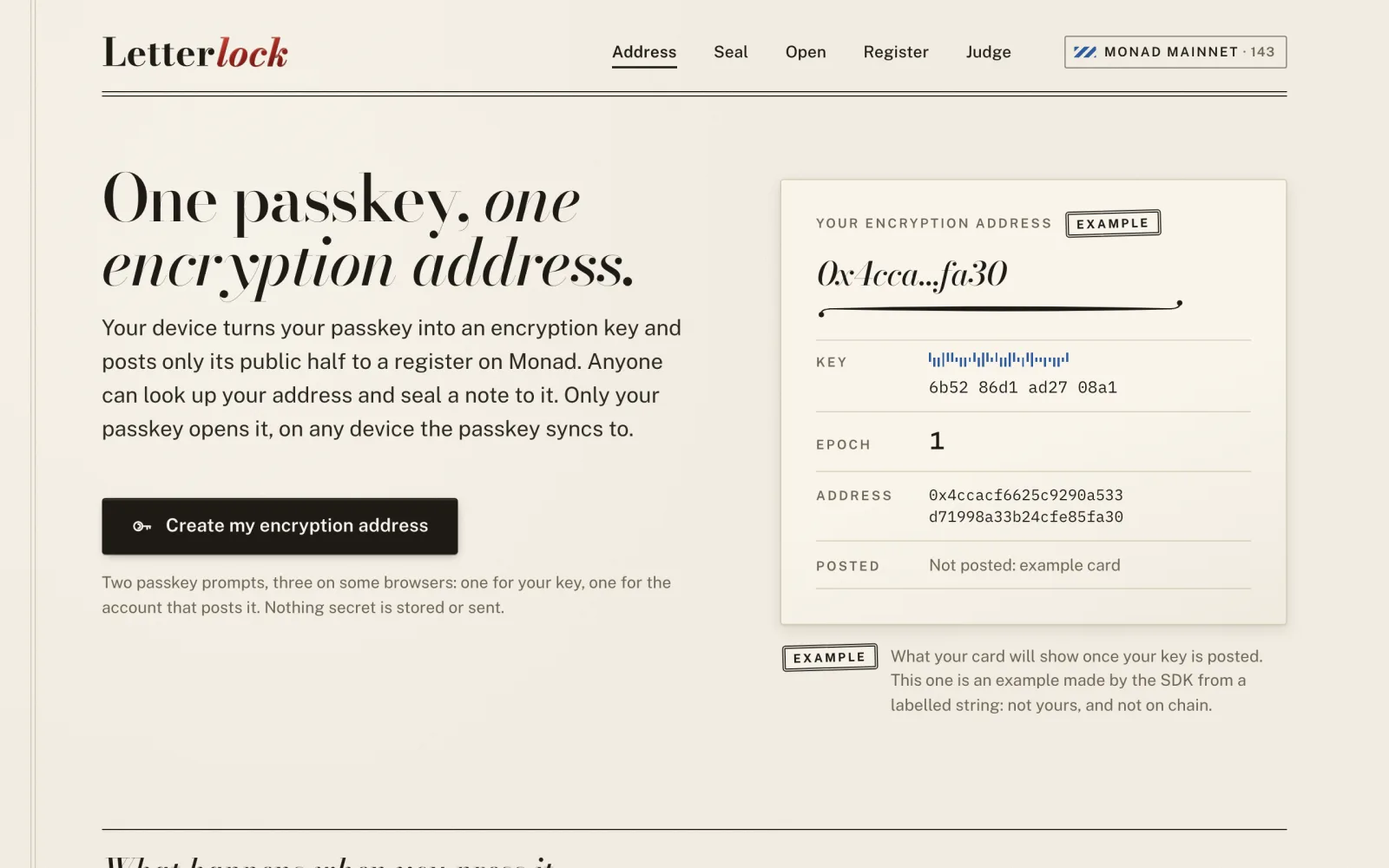
Posted once, sealed to by anyone.
Mainnet · 27 Sep 2026 · run at letterlock-app.vercel.app
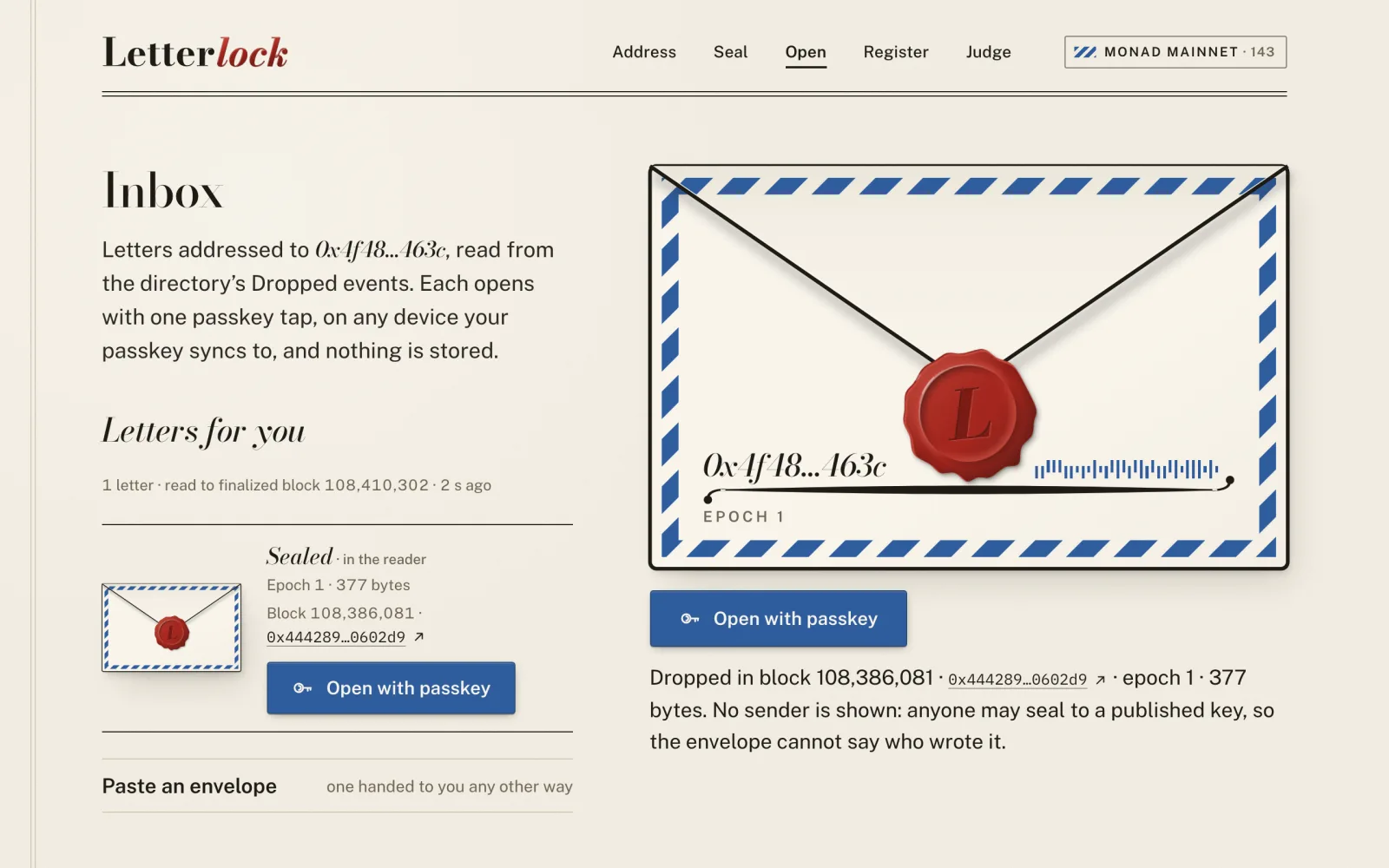
Storage cleared. The seal still breaks.
1
2
1The agent's letter
2One passkey tap
"storage cleared + reopen": {
"sameAddress": true,
"opened": true
}
The agent's drop: 0x44428957…02d9
Five calls, one passkey.
Derive
PRF output becomes an X25519 key. Nothing stored.
WebAuthn PRFPublish
Posted by the passkey itself.
Resolve
One read, any app.
keyOfSeal
No passkey, no transaction.
HPKERotate
Old notes still open.
Why Monad
Read on every seal, written once per person.
Post a key
70,863gasLook up + seal
28.199msp50
Drop 490 bytes
45,780gasERC-8004 agent
10260mera: every passkey is a Monad account
Traction · 4 Oct 2026
Shipped this week. Adoption is next.
outside integrations, so far.
Asking first: attest8004, MNEME, an ERC-8004 indexer.
The ask
Seal to a person, not to a server.
Builders: one read.
npm i letterlock
Judges: two devices.
app.letterlock.edycu.dev/judge
/judge · scan to try
01 / 10